
Whether you’re working on a high profile application or a live service game, Release Management shouldn’t be a last‑minute checkbox or a “final boss fight” when it comes to shipping software. When RM gets a seat at the table earlier on in the process, even at the product planning stage, there’s a real opportunity to: reduce surprise risk, ship smaller safer changes, and give teams a more stable path to launch; without drowning in process and last-minute red tape.
When teams feel out of control late in the cycle, they pile on process. That slows work, burns people out, and distracts from the real goal: shipping a quality release, on time. The fix isn’t more ceremony; it’s preemptive with streamlined guardrails and clear, transparent milestones.
Getting Started – What Makes a Good Release Program?
Clear milestones everyone recognizes.
Accessible on-boarding so stakeholders understand the requirements and process.
Shared well defined metrics for release health and customer impact.
These hallmarks help us to ship quality software collectively as a team, org or company and RM is a vital partner in this. Embedding RM early creates a positive feedback loop that improves not just “the release,” but the entire product journey from inception to production to ongoing support.
Demystify the Release Management Black Box: Onboarding & Transparency

At many companies, release management is seen as a black box or even adversarial to feature teams. Change that by onboarding teams to the release process the same way you onboard them to product or design:
- Make the operating model visible.
- Teach it early.
- Keep it intentional and lightweight.
RM should be a partner with a clear playbook, not a locked gate you discover at the end. Embedding RM early also means defining release milestones together with product, design, engineering, QA, and marketing so that everyone understands and owns them.
Lean, Embedded RM – Operating Principles
A lean and intentional release program should operate with a multi-faceted approach consisting of: communication, understood metrics, and intentional process. These three facets should tie directly into each other by communicating and building intentional process around understood metrics for success, release criteria and standards.
Communication and onboarding

Communication and on-boarding are vital and living cornerstones to the release management program, as they build trust, empathy and understanding
- Communicate – milestones, status and blockers in release readiness meetings, or Shiproom meetings. These meeting have the added benefit of surfacing other dependencies and issues. The cadence of these meetings may change depending on the needs of the team and product.
- Communicate First Party Requirements – If we’re launching on a first party storefront, we need to communicate their submission and technical requirements to internal stakeholders and keep this information updated.
- Clear on-boarding and Communication – We can use these in concert with each other to shape release guardrails that can help us rely less on enforced gates later in the process that will slow things down.
Metrics
Metrics and KPIs are very important key frames of reference in a release program that create a shared understanding for tracking health, response prioritization and metrics for success
- Understood Acceptable Thresholds – for stability in pre-production environments relative to production environments.
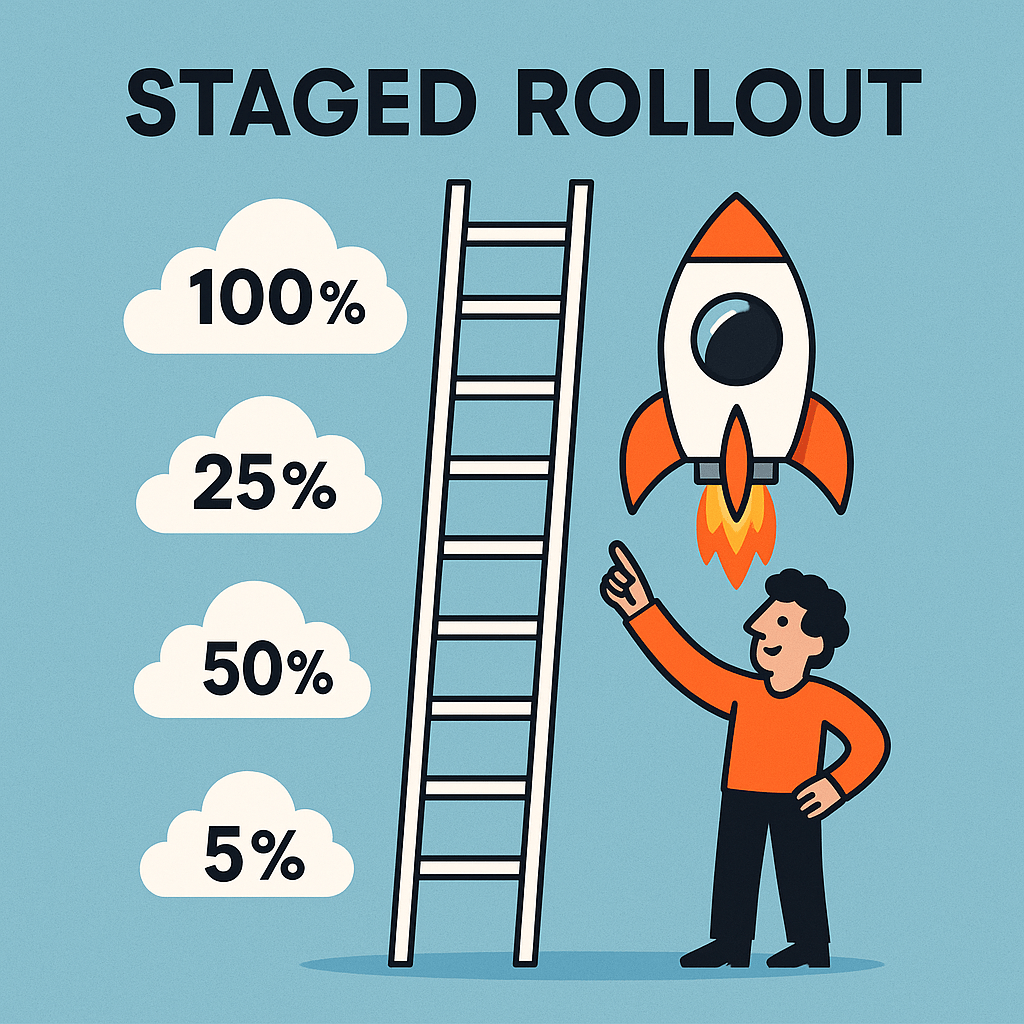
- Plan for Safe Changes, Not Perfect Changes – Define and plan your feature rollout steps early (internal → small % → wider → all users) and write down the pause/rollback triggers.
- Make Quality Explicit – Put 3–5 non-functional goals (performance, reliability, compatibility, maintainability/accessibility) in the PRD and measure them. We should collaborate with QA to help define based on their metrics as well
- Use Dashboards and Analytics – Leverage to understand player engagement, feedback and release health qualifiers
Process
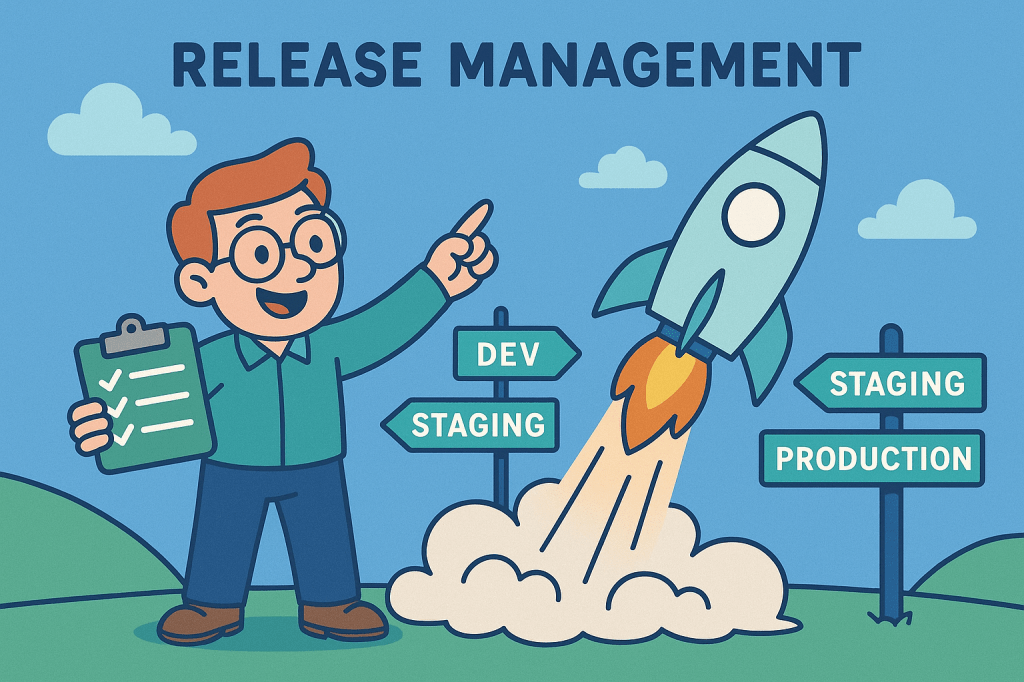
Process is an important element of a scalable release pipeline, but should not be seen as a gatekeeping tool, but an enabling tool to ship quality release on time.
- Better Onboarding and Runbooks – Ensure they are updated with first party submission criteria and esoteric information for the product you’re releasing
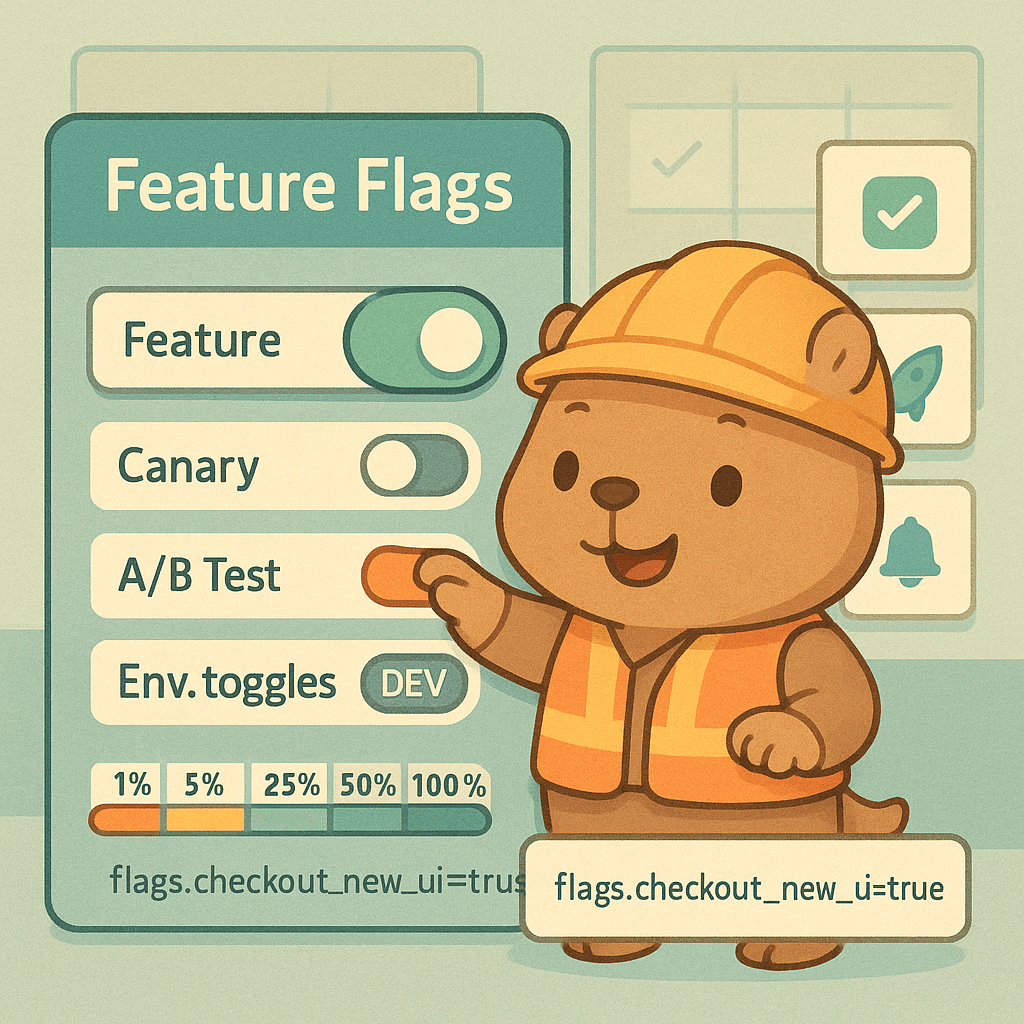
- Design for a Safe Fallback – Not everything is reversible, but use feature flags when feasible.
- Use Controlled Exposure – The goal is to be able to pivot to reduce blast radius and not as a magic eraser for issues.
- Protect Reliability with an Error Budget – If reliability drops below target, pause risky changes until it recovers and avoid mid-incident debates when possible.
- Maintain Branch Stability – Always having a shippable branch.
- Practical Fallback Mitigations – When flags aren’t viable, employ practical fallbacks and mitigation strategies
- Config Kill-Switch – route around a code path via server config/env var.
- Quick Disable – ship to 1–5% behind a service switch you can flip.
- Blue/Green (or Flight Ring) Deploys – keep a known-good version hot.
- Shadow or Dark-Launch – exercise paths without user impact before enabling.
- Data-Safe Migrations – expand → backfill → switch → contract, with roll-forward plan.
- Content/Playlist Gating (Live Games) – server-controlled rotations and drop-tables you can tune without a client patch.
Where Release Fits: Today vs. Ideal (Chronological Walkthrough)

Map of the product lifecycle with RM touchpoints
| Stage | Today (Typical) | Ideal (Lean & Embedded) |
| 1) Discovery | RM not invited. | RM does a 30‑minute read‑through of goals; flags store/cert constraints, suggests flags/rollback. No approvals—just notes. |
| 2) PRD & Roadmap | RM reviews late, after dates are locked. | Add lead‑time buffers (store/cert), propose rollout ladder & pause/rollback triggers, list non‑functional targets in PRD. |
| 3) Technical Design | RM absent. | Check for toggles, telemetry for go/no‑go, and submission/store artifacts planned early. |
| 4) Build & Integrate | RM appears near code freeze; long‑lived branches. | Trunk‑based dev, small merges, automated checks; keep a tiny, living release checklist. |
| 5) Test & Hardening | One release rehearsal; manual checks. | Automated smoke/perf baselines, policy sanity checks, console mock‑submission pass. |
| 6) Pre‑launch & Store Prep | Metadata scramble in the last week. | Store assets started weeks earlier; reviews/approvals buffered and tracked. |
| 7) Launch / Rollout | One‑shot release; rollback is risky. | Staged rollout with kill‑switches; pre‑agreed pause/rollback triggers enforce safety. |
| 8) Operate & Learn | Reactive; flags linger. | Post‑release review prunes flags, updates checklist, and improves the next PRD. |
RM User Stories in planning

To surface hidden dependencies early, consider including a few RM‑authored user stories directly in a PRD (Product Requirements Document) or adapting them into risk dependencies into a product roadmap. These aren’t approvals, they’re prompts that make risks and dependencies visible.
A release management team can work with stakeholders to create a risk register as a contextual guide to build release dependency user stories.
There’s additional value in that the risk register and user stories can create a starting point for building more robust release management documentation and runbooks that are also contextually inclusive of the overall software development cycle for the organization, instead of just the release management specific elements.
Some Example User Stories
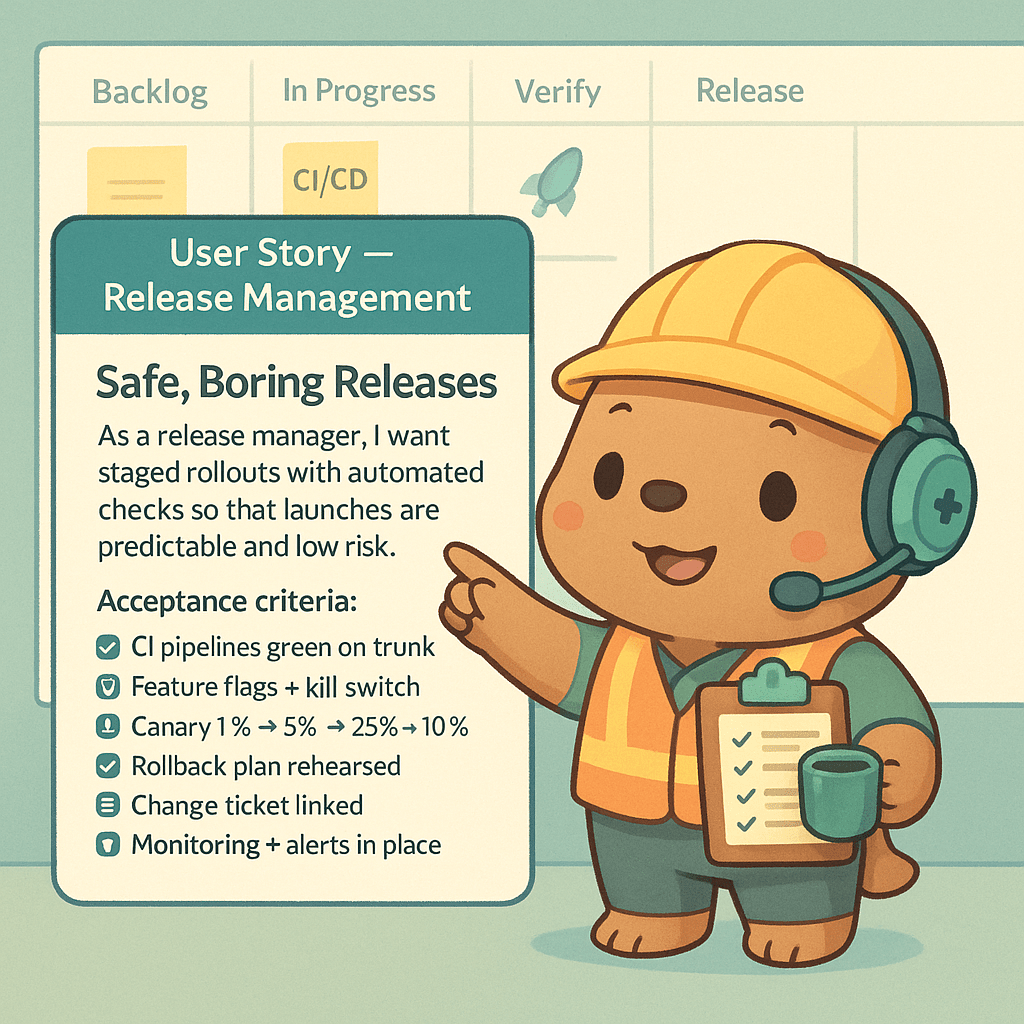
- As a release manager, I need feature flags for new user‑visible changes so we can decouple deploy from release and roll back safely.
- As a release manager, I need store/certification asset timelines (screenshots, videos, age ratings) committed in the roadmap so we don’t slip dates.
- As a release manager, I need pre‑defined rollout stages and go/no‑go metrics so we can pause or roll back without arguing during an incident.
- As a release manager, I need telemetry on crash‑free rate, startup time, and key reliability signals to judge release readiness and recovery.
- As a release manager, I need clearly defined metrics and KPIs for tracking stream and release health so that I can educate stakeholders and use as criteria for go/no-go and for patch planning
- As a release manager, I need a plan to retire feature flags after launch so they don’t become long‑term test complexity.
- As a release manager, I expect LiveOps teams to have robust runbooks and rollback procedures for handling live issues
- As a release manager, I want a clearly defined rubric for emergency patch criteria with understood escalation and mitigation paths
Successful RM User Story Examples
Here are some real-world adapted and slightly altered case scenarios that showcase the benefit of incorporating Release Management user stories into a software development pipeline.
Earlier asset internal review with design and marketing stakeholders
Situation: Marketing booked beats around a PC launch, but store-page review and localized assets historically landed late.
Early RM move: In the PRD, I added RM stories for “store presence ready by T-3 weeks” and “localization/ratings assets scheduled and tracked.” We submitted the store page early with time for feedback.
Outcome: Steam approval cleared with buffer; localization/age-rating materials were done ahead of the ad campaign. No last-week scramble, and the launch hit the planned marketing window cleanly.
Design and test suspend/resume flows for every gameplay state
Situation: We planned a simultaneous console launch. Past projects had tripped over platform checks, including wrong button labels (“Options” vs “Menu”), and resume-from-suspend bugs
Early RM move: At project planning time, I added two RM user stories: “Validate UI terminology against each platform’s checklist.” and “Design and test suspend/resume flows for every gameplay state.”
We scheduled a mock-cert pass two sprints before submission and created a mini asset calendar for submission materials.
Outcome: We fixed label text and a pause-menu edge case before code freeze, assembled a complete submission package, and passed cert on the first try, avoiding a 3-5 day re-submission slip and keeping marketing beats intact.
Counterpoints – Keeping Things Honest
Despite the many potential improvements from including Release Management early on in a development pipeline, there are some counterpoints to consider. A strong release program can be involved at the forefront of the process, but should still enable development rather than hinder it.
Overhead Kills Momentum – Small teams need to move fast, so keep the RM process as lightweight as possible while still being functional until risk grows.
Heavy Approval Process – Evidence shows heavy approvals slow teams and don’t improve stability; prefer automation and peer review.
Scope Creep – ‘Fix everything early’ is unrealistic; modern delivery flattens cost of change.
Culture Shock From Complicated Process – Keep early RM light and reversible, not a big upfront design ritual.
Over Engineering – Flags add complexity. Commit to retiring flags quickly so they don’t rot your test matrix.
Information Exhaustion – Be wary of draining your teams with too much information across too many tools. Keep your status updates at an expected cadence and the information reliably updated in clearly communicated places.
Confusing On-boarding Due to Process Changes – Be pragmatic in the approach to on-boarding and status updates without spamming individual contributors and communication channels. Maintain context driven on-boarding with distilled information.
Streamlined Release standards

By creating some basic standards and process tweaks, we can streamline our release process with fewer vectors for ambiguity.
- Rollout Ladder – 5% → 25% → 50% → 100% (for updates). Pause/rollback triggers written down.
- Reliability Rule – (error budget): if we miss our if we miss our Service Reliability Target Levels (SLO), we pause risky changes until reliability recovers.
- Design for Rollback – every net‑new feature ships behind a flag; each flag has an owner and an expiry date.
- Main Shippable – even if it’s just internally: short branches, frequent merges, CI checks; avoid big‑bang merges.
- Quality Bar – 3–5 non‑functional targets in the PRD and how we’ll measure them. We can create better OKRs (Objectives and Key Results) for the Release Team from these that will help define future PRDs and should align to org level OKRs.
- Store/Cert Buffers: put lead times on the roadmap now; track them like features. Adding a natural buffer for a few extra days will help protect the release date from slipping.
Success Criteria – Let’s prove it
When defining our KPIs and metrics for success we can measure upfront calculated risk against actual results in retrospectives and post-mortems and derive feedback from internal teams, ensuring that they understand their place in the release process and not just checking boxes in order to ship. We can diff this against customer results and feedback to ensure alignment.

- Ship at Scale with Quality – Higher deploy frequency or shorter lead time without raising change failure rate.
- Stronger Customer and Player Positive Results – More intentionally driven planned quality and stability releases that lead to increased customer trust surfaced by feedback and ratings as opposed to emergency patches which disrupt our cadence, lower trust and have the potential to cause new issues
- Faster Recovery – Time to Repair is reduced when something goes wrong.
- Fewer Surprise Delays – Fewer “surprise” delays from store/certification timelines.
- Fewer Certification Failures – builds better first party trust and allows us to work faster with shorter approval times.
- Fewer Emergency Meetings – Less process added late in the cycle; requiring fewer emergency meetings
Deploying Success

A healthy release program should be a north star in the software development lifecycle from inception to production. Whether in games or software, empower Release Management early on as true stakeholders in the process so they can demystify the path, size risk, onboard partners, and keep the process simple enough to follow.
When everyone understands how we ship and maintain software, we can pave a golden path where shipping gets kinder, scalable, and more reliable – the way it should be.
Acronyms and key terms
PRD — Product Requirements Document
The “what/why” for a product or feature; sets goals, scope, and success criteria.

SLO / SLA — Service Level Objective / Agreement
Reliability targets (SLO) and any formal commitments (SLA). SLOs drive the error budget.

KPI — Key Performance Indicator
A metric that reflects success (e.g., crash-free sessions, startup time, change failure rate).

OKR — Objectives and Key Results
Goals and measurable outcomes—can align release goals with org priorities.

CI/CD — Continuous Integration / Continuous Delivery
Automated build/test/deploy so small changes ship safely and frequently.

QA — Quality Assurance
Testing discipline; in this model, co-owner of the quality bar and its measurements.

LiveOps — Live Operations
Operating and improving a product already in the wild (events, balance, hotfixes, tuning).

MTTR — Mean Time to Restore/Repair
How quickly you recover when something breaks.

DORA metrics
Industry-standard delivery metrics: deployment frequency, lead time for changes, change failure rate, and MTTR.

TBD (in code) / Trunk-Based Development
Short-lived branches, frequent merges—keep “main” always shippable.

ANR — Application Not Responding (mobile)
A mobile health metric; long freezes that degrade UX and store ratings.

1P — First Party
Platform/store owner (Apple, Google, Valve, Sony, Microsoft, Nintendo) and their rules.

Lotcheck / TRC / TCR / XR (consoles)
Nintendo (Lotcheck) and Sony/Microsoft certification rule sets—public checklists you must pass to ship on console.
 brandon boswell